







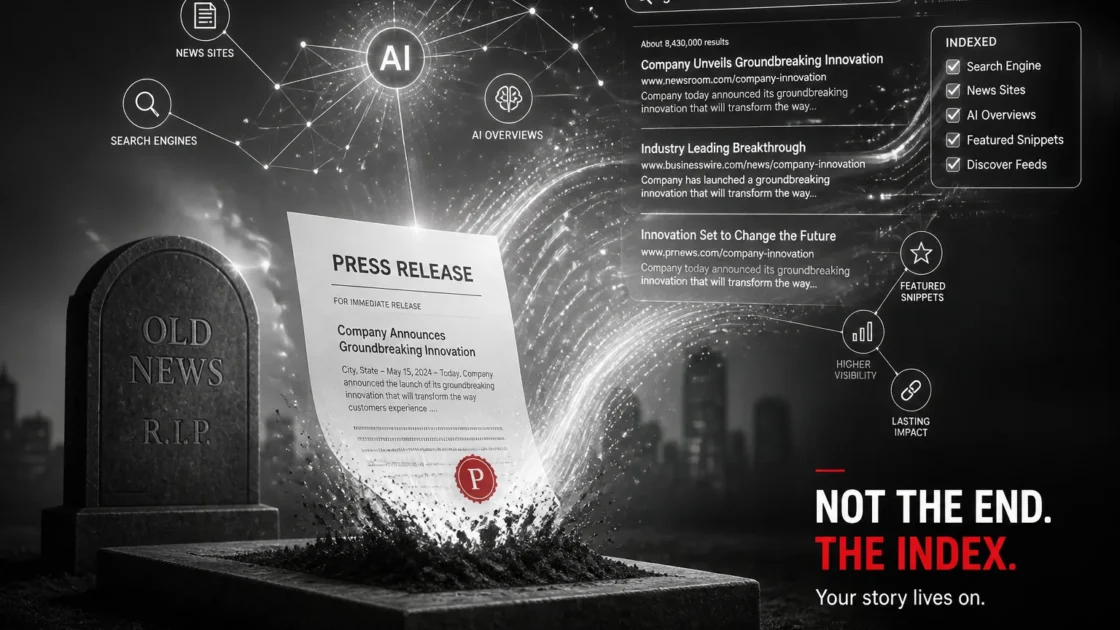





We had all but danced on the grave of the press release for the last few years. I can actually count on one hand the number of releases we recommended and wrote. “RIP press release” was a mantra we had embraced.
But, just like the comeback of the Y2K aesthetic (hello baggy jeans) and nostalgia culture, press releases are back – but their role has evolved. While traditional earned media coverage from press releases alone is less common than it once was, releases continue to serve several important strategic functions:
They create a permanent, authoritative record of company news. Press releases are often hosted on high-authority domains and syndicated broadly, which helps ensure our announcements are indexed, searchable, and discoverable over time.
They support visibility in AI-driven search and large language models (LLMs). Increasingly, tools like ChatGPT, Gemini and others pull from a wide range of indexed web content to inform answers. Press releases contribute to that ecosystem by reinforcing key messages, facts, and narratives about the brand in a structured, credible format.
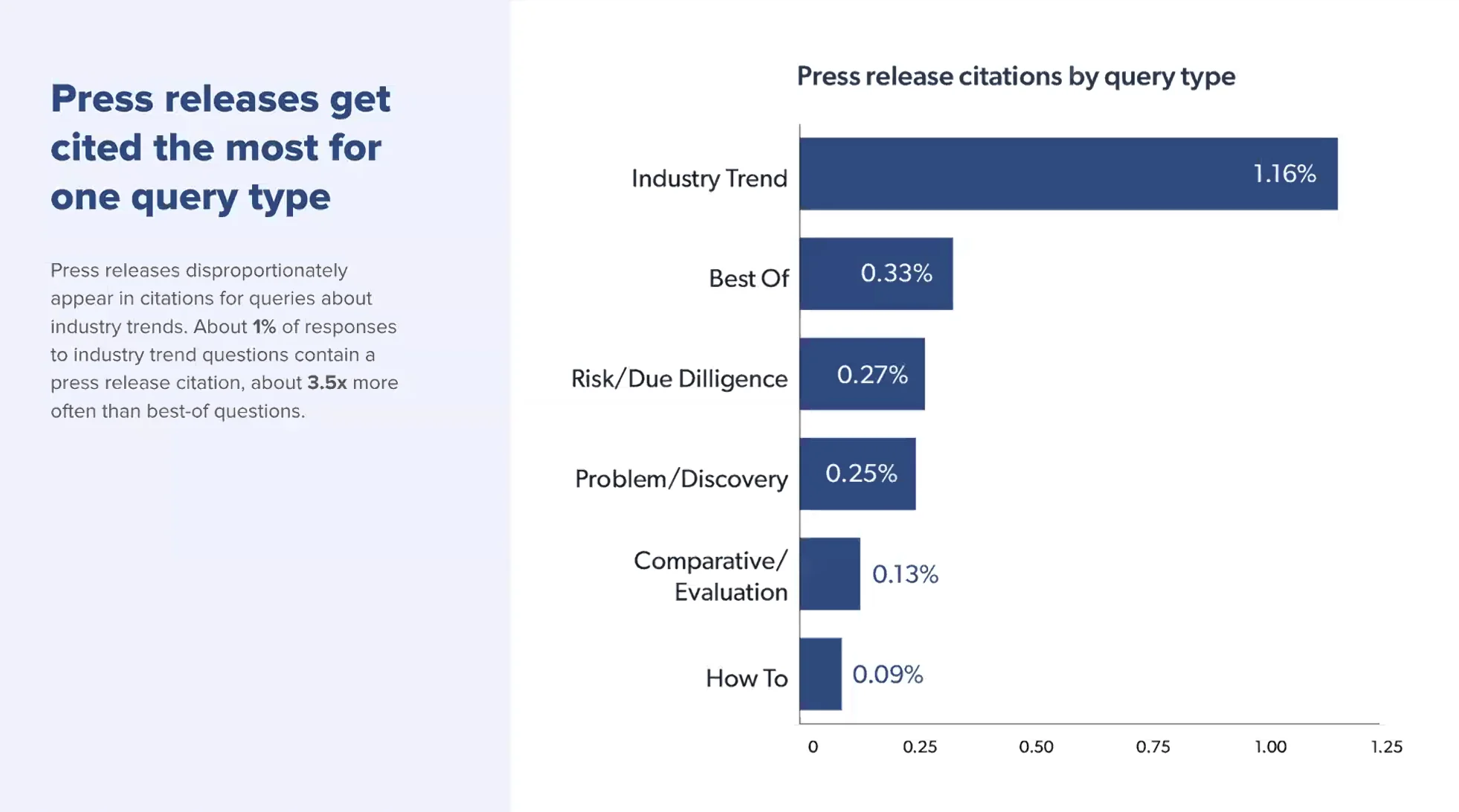
We’re seeing growing evidence that LLMs frequently surface and rely on press releases as source material. In fact, according to Muck Rack, press releases disproportionately appear in citations for queries about industry trends in particular. As we continue to learn more about how these systems digest and prioritize information, it’s clear that well-structured, factual content like press releases plays an important role in shaping how brands appear in AI-generated responses.
They strengthen SEO and digital footprint. Releases help associate our brand with specific keywords, topics, and announcements supporting broader search visibility beyond just media coverage.
Press releases are no longer just about immediate media pickup – they are important building blocks for long-term visibility, credibility, and discoverability across both traditional and emerging channels.
On that note, we’re also learning so much about how to optimize press releases with all of this in mind. This includes things like: using clear, descriptive headers, concise language, bullet points, and well-organized information to make content easier for both humans and AI systems to parse and interpret accurately. All to say, you’ll start to see us making suggestions in press release drafts that might feel different but are to ensure the brand is accurately represented across channels.